
Ohio Property Records
Ohio property records are kept by County Auditors and County Recorders in each of the state's 88 counties. You can search for deeds, tax data, parcel maps, and land records online or in person at the local courthouse. Most counties run free search tools on their websites that let you look up any parcel by owner name, address, or parcel number. The County Auditor sets property values and tracks tax info. The County Recorder files deeds, mortgages, and liens. If you need a full title search or a certified copy of a deed, the Recorder's office is where you go. Ohio law makes these records public, so anyone can look them up at no cost for basic searches.
Ohio Property Records Overview
Where to Find Ohio Property Records
Two main offices handle property records in Ohio. The County Auditor keeps track of who owns each parcel, what it is worth, and how much tax is due. The County Recorder stores the legal documents that prove ownership. Both offices are in the county courthouse, and both keep records that are open to the public under Ohio Revised Code Section 149.43. You can walk in and ask to see any record during normal business hours. Inspection is free, though copies may cost a small fee.
The County Auditor is the chief fiscal officer and the chief assessor for property tax. Under ORC Chapter 319, the Auditor must set fair market value on every parcel of land and every building in the county. Ohio law says all real property gets reappraised every six years, with a statistical update at the three-year midpoint. The Auditor also tracks ownership changes, calculates tax bills, and runs the county GIS map system. Most Auditor offices now have free online search tools where you can look up any parcel in the county.
The County Recorder is the office that files and stores deeds, mortgages, liens, easements, and plats. When a property changes hands, the new deed must be recorded here to give public notice. The Recorder indexes every document so you can search by name, parcel number, or book and page. Copy fees are set by state law, usually $2 per page with a $1 certification fee.
The Ohio Secretary of State maintains a business filings database that can help you trace property held by LLCs, corporations, or trusts. If the owner of a parcel is a business entity, this database shows the registered agent and contact info.
Note: County Auditors handle property valuations and tax records while County Recorders maintain deeds and legal documents. Both are public offices with free access to records.
How to Search Property Records in Ohio
Start with the County Auditor's website. Every county in Ohio has an online search tool. Some use Beacon, some use Tyler Technologies, and others have custom portals. All of them let you search by owner name, property address, or parcel ID number. Search results show ownership details, assessed value, market value, tax history, building info, and sales history. Most of these searches are free. You do not need an account or login for basic lookups.
For recorded documents like deeds and mortgages, go to the County Recorder. Many Recorder offices now offer online document searches. You can look up records by grantor or grantee name, document number, or book and page. Some counties have digital images going back decades. Others have online indexes with images available only at the office. The GeoOhio Statewide Parcel Viewer lets you search across county lines and links to local Auditor sites for full details.
The Ohio Department of Taxation provides statewide data on property tax rates, levies, and assessment standards. Their resources include tax rate databases for all 88 counties and roughly 2,400 taxing districts throughout Ohio. Tax rates are expressed in mills, with one mill equal to $1 of tax per $1,000 of assessed value.
The Ohio Secretary of State maintains business filing records that are useful when researching property owned by corporate entities or LLCs. You can search by company name or registration number at sos.state.oh.us.

The search system returns details on corporations, LLCs, partnerships, and trusts including statutory agent info and registered office addresses.
Types of Ohio Property Records
Ohio keeps several kinds of property records. Each serves a different purpose. The deed is the legal document that transfers ownership from one party to another. Warranty deeds, quit claim deeds, and fiduciary deeds are the most common types filed in Ohio. Under ORC Section 319.202, every deed must be presented to the County Auditor along with a Conveyance Fee Statement (DTE Form 100) before it can go to the Recorder for filing.
Tax records show what a property is worth and how much the owner pays each year. The assessed value in Ohio is always 35% of the true market value, as set by ORC Section 319.54. Tax records also show payment history, delinquency status, and what taxing districts the property falls in. You can see how your tax dollars split between schools, townships, cities, and special districts.
The Ohio Department of Taxation offers several property-related forms. These include DTE Form 100 for conveyance fees, DTE Form 100EX for exemptions, DTE Form 105A for Homestead Exemption applications, and others used during property transfers.
Mortgage records show who has a lien on the property. These are filed with the County Recorder and stay on record until the loan is paid off and a release is filed. Title searches pull all these documents together to show the full chain of ownership and any outstanding claims.
The Ohio Property Tax Rate Database tracks rates and levies for all taxing districts in the state. This helps you find out the exact tax rate for any location.
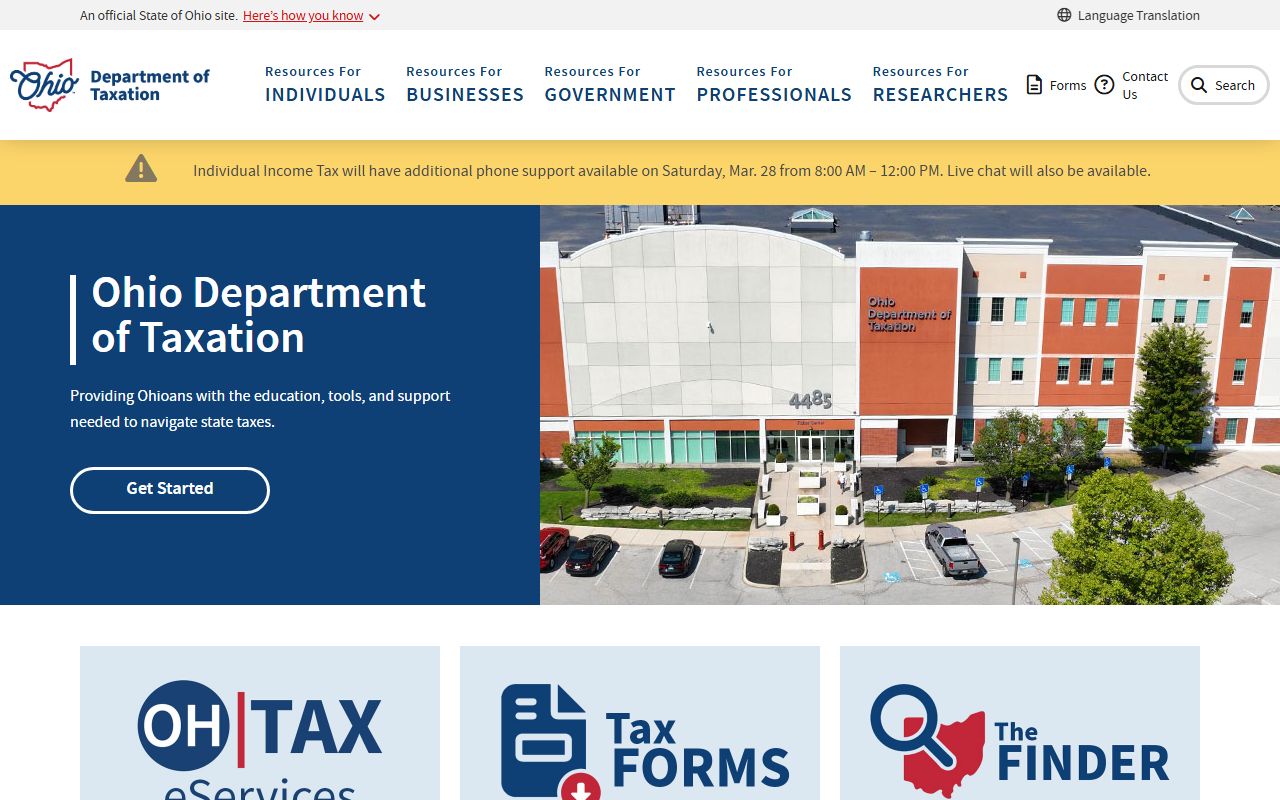
The Department of Taxation also administers the Current Agricultural Use Value (CAUV) program and the Homestead Exemption that can lower property tax bills for qualifying owners.
Ohio Property Tax and Assessments
Property taxes in Ohio fund schools, public safety, roads, and local services. The system works through County Auditors who appraise property and County Treasurers who collect the taxes. Ohio law requires a full reappraisal every six years with a statistical update at the three-year mark. The Department of Taxation certifies value changes based on sales ratio studies. This cycle keeps values in line with what properties actually sell for.
The conveyance fee is another part of Ohio property records. Under ORC Section 319.20, counties charge up to $4.00 per $1,000 of sale price plus a $0.50 transfer fee per parcel. These fees must be paid to the County Auditor before any deed can be recorded. The fee generates revenue for the county and creates a record of the sale price.
Ohio provides two main tax relief programs for homeowners. The Owner-Occupied Tax Reduction gives a credit to people who live in the home they own. The Homestead Exemption shields up to $25,000 of market value from taxation for seniors 65 and older or people with permanent disabilities. Applicants must have an Ohio Modified Adjusted Gross Income under $40,000 and must apply by December 31st of the year they want the exemption.
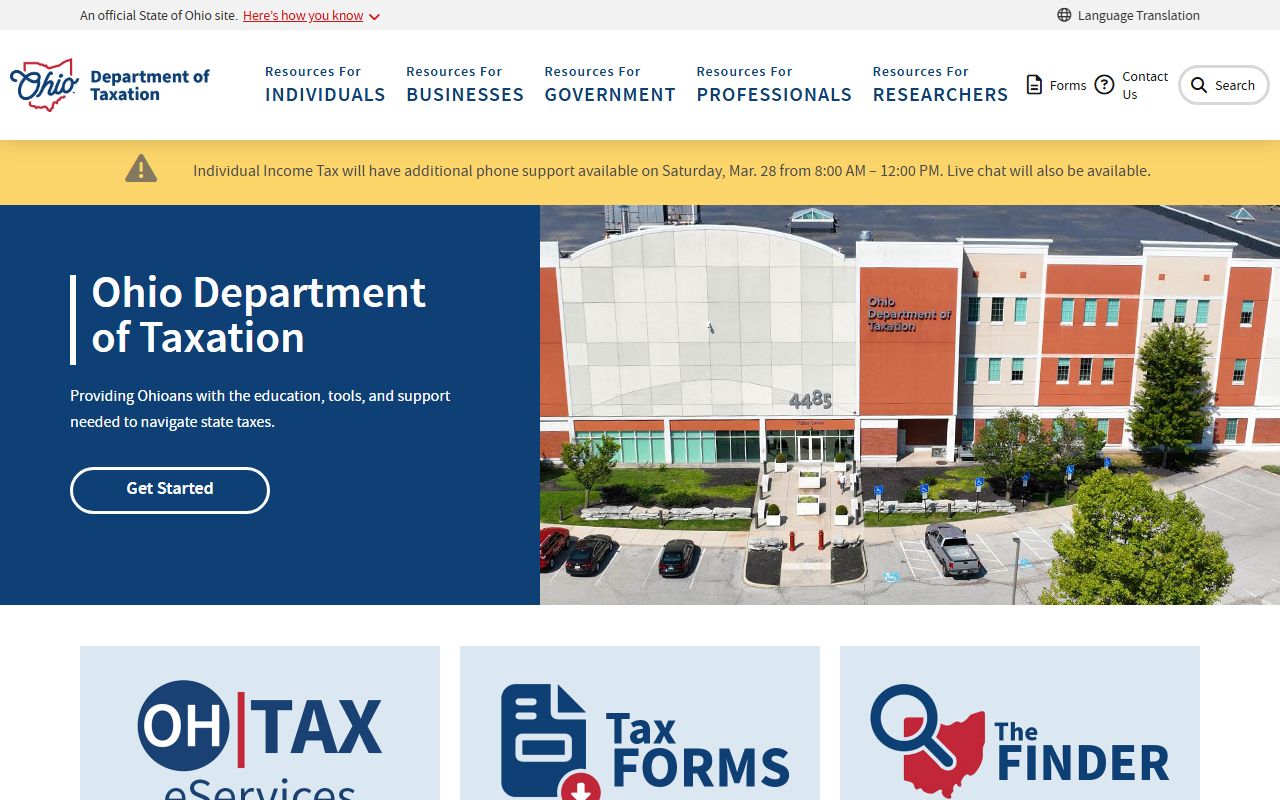
The state tax rate database at tax.ohio.gov covers all 88 counties and their taxing districts. Rates are updated each year after the County Budget Commission certifies them.
Property Records Maps and GIS Data
GIS maps are a big part of Ohio property records now. Most County Auditors offer interactive parcel maps on their websites. These maps show property lines over aerial photos and link to the full record for each parcel. You can click on any lot to see the owner, assessed value, and tax info. Some counties also show flood zones, school district lines, and zoning.
The GeoOhio platform is the state's central hub for parcel data. It pulls GIS info from all 88 counties into one map. You can search by address and jump to the local Auditor site for details. The Parcel Land Use Lookup shows how each lot is classified. The data comes from county auditors and gets updated on a regular schedule.
The statewide parcel viewer at GeoOhio lets you search for parcels by address and view boundaries across county lines.
County Engineers also play a role. Under ORC Section 319.61, the County Auditor and County Engineer work together on tax maps. The Engineer's office documents boundary surveys and manages the land transfer process. Tax maps show dimensions and acreage but are not the same as a legal survey.
Ohio Public Records Law and Property
Ohio has strong public records laws. Under ORC 149.43, records kept by public offices are open to the public with limited exceptions. Property records from the Auditor, Recorder, and Treasurer all fall under this law. You can inspect them for free during business hours. If you want copies, the office can charge a reasonable fee that covers the cost of making them.
Some records have limits. Taxpayer info held by the Ohio Department of Taxation under ORC 5703.21 is not public. But property valuations, assessment data, and recorded documents kept by county offices are fully public. If a county denies your records request, you can file a mandamus action in the Ohio Court of Claims or common pleas court to force the release.
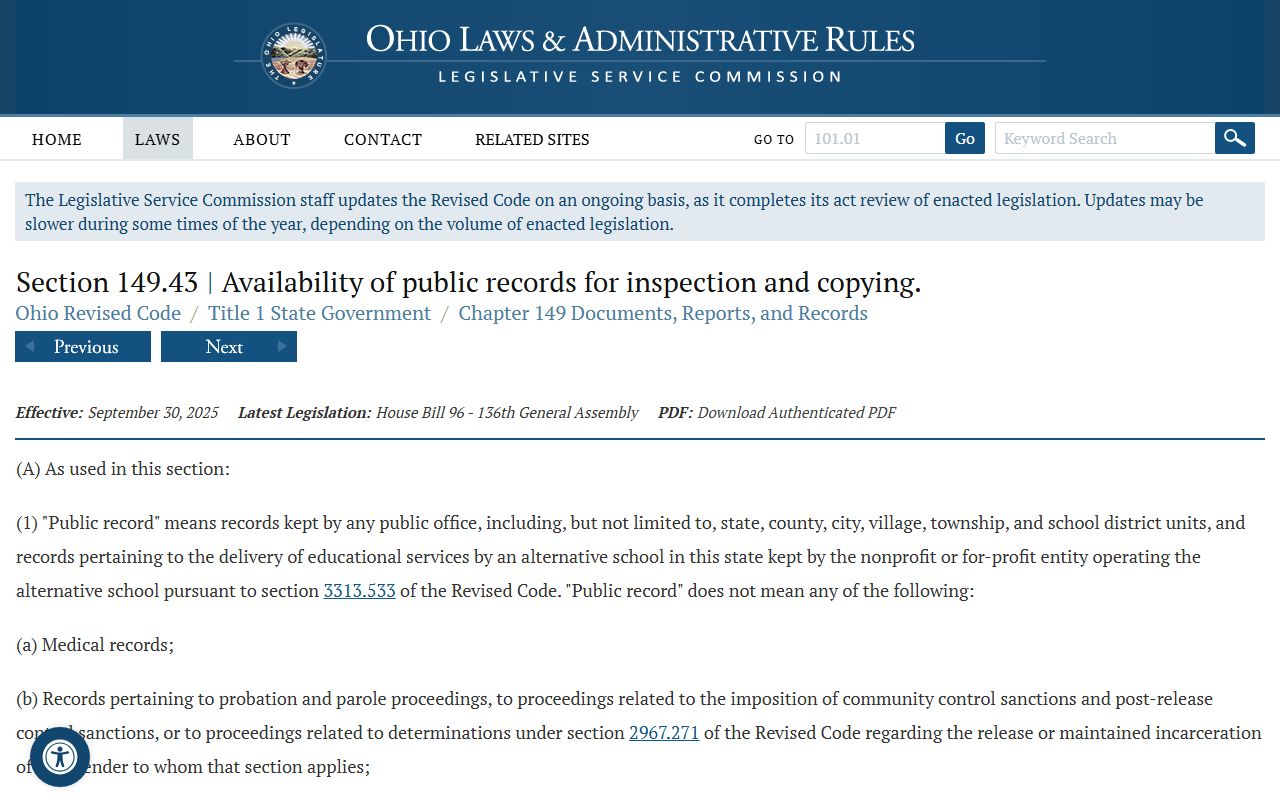
ORC 149.43 defines what counts as a public record and sets the rules for how offices must respond to requests.
Historical Property Records in Ohio
Ohio has deep roots in property records. The Ohio Digital Network hosts historical property photographs taken by county auditor offices for tax assessment purposes. These images show buildings from the early to mid-20th century and are useful for genealogy and historical research.
The collection includes photographs from multiple Ohio counties with dates and descriptions of properties as they stood at the time of assessment.
The Ohio Checkbook transparency portal shows how county governments spend property tax revenue. You can search by county, department, or vendor to see where your tax money goes. While it does not show individual property records, it gives context on how the system works at the county level.
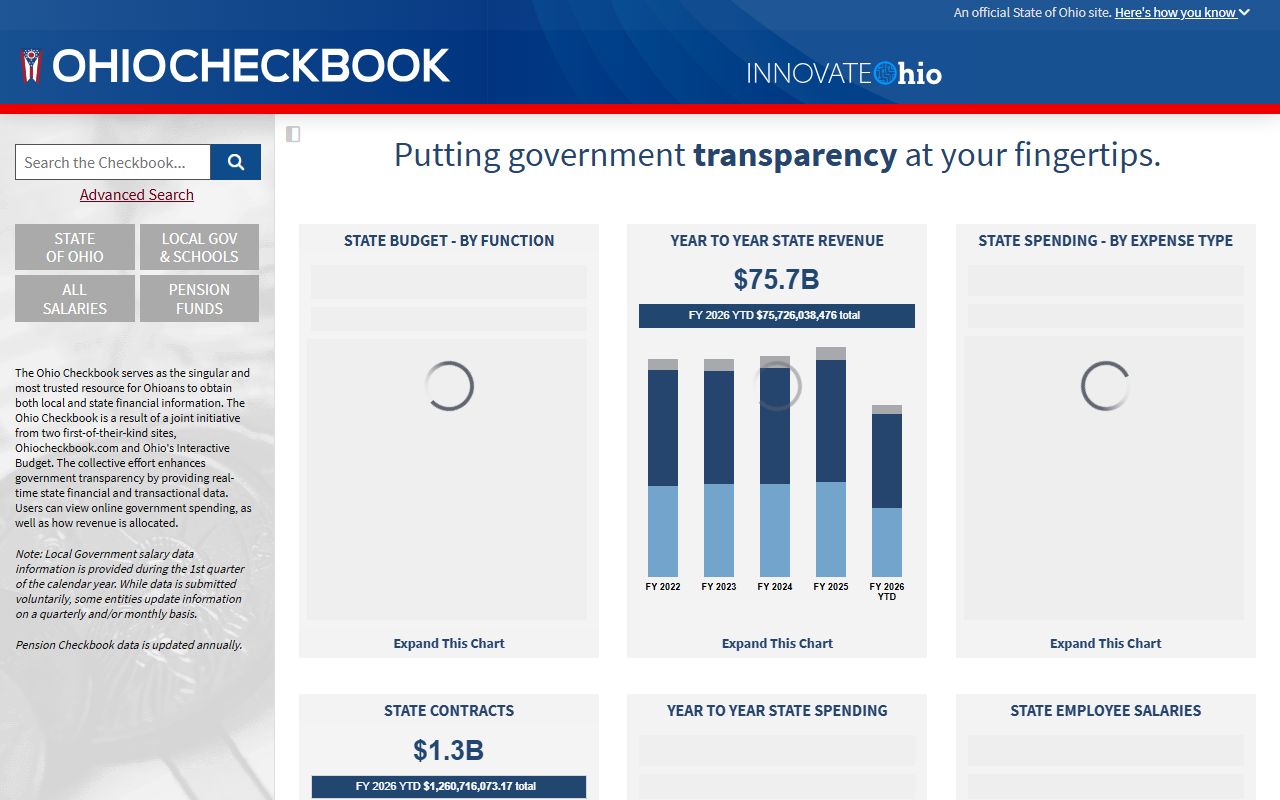
Ohio Checkbook includes expenditure data from county governments, showing how property tax revenue gets allocated.
Ohio Property Records Resources
The Ohio State Owned Real Property Database lists all property under state control. It covers state office buildings, parks, wildlife areas, and correctional facilities across all 88 counties. This tool is helpful when you need to know if a state interest affects nearby private land.
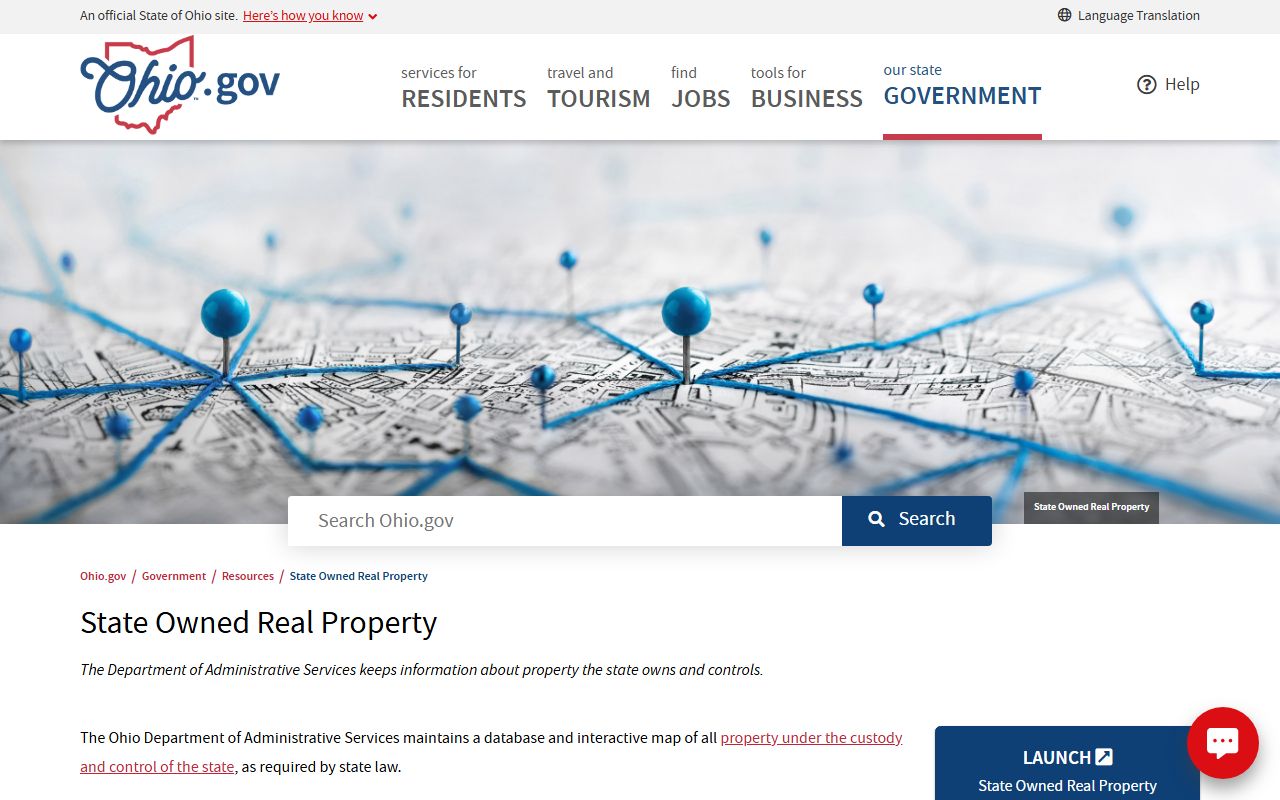
The interactive map lets you see state properties by county, facility type, or property name.
The Ohio Revised Code at Chapter 319 lays out the duties of County Auditors. Chapter 5713 covers real property assessments. Chapter 323 handles tax collection and what happens when taxes go unpaid. These statutes are the backbone of Ohio's property records system.
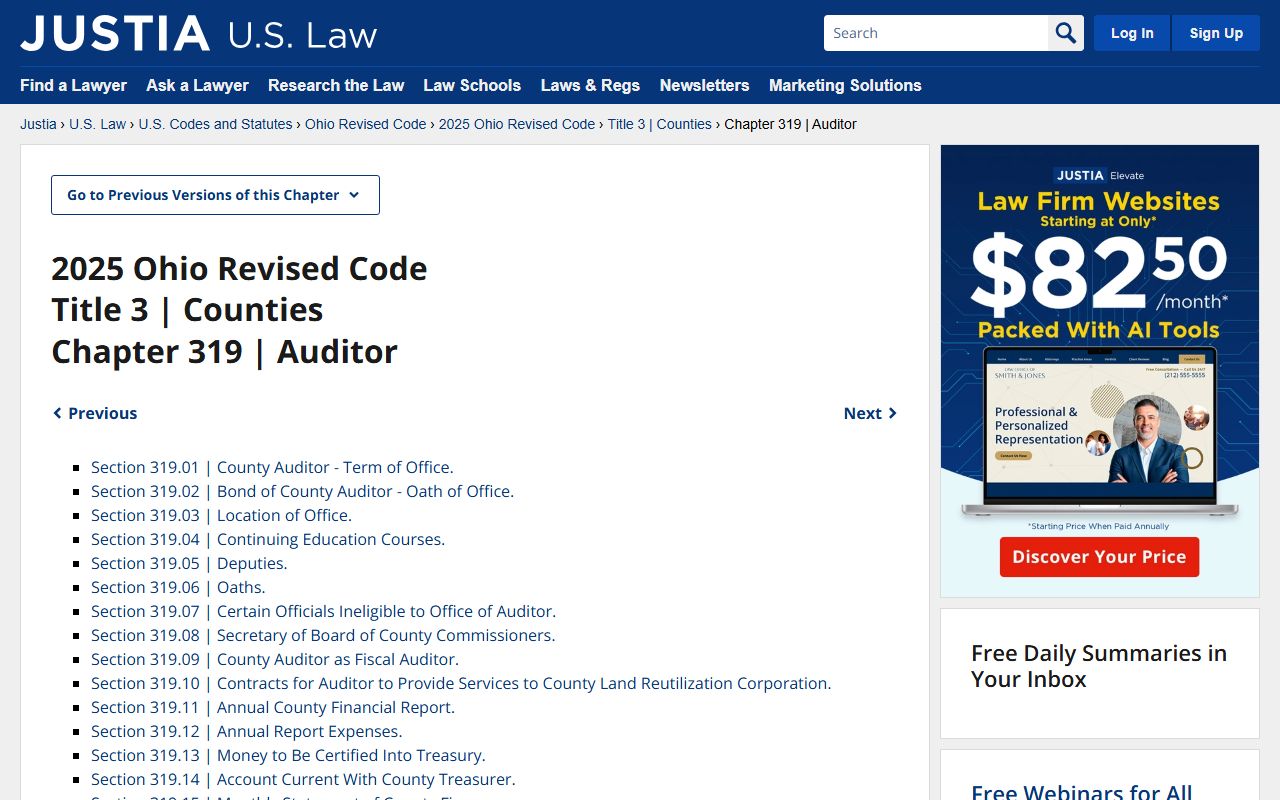
The full text of ORC Chapter 319 covers everything from property appraisals to conveyance fees to tax map requirements.
Browse Ohio Property Records by County
Each of Ohio's 88 counties has its own Auditor and Recorder that manage local property records. Pick a county below to find search tools, contact info, and resources for that area.
Property Records in Major Ohio Cities
City residents search for property records through their county's Auditor and Recorder offices. Pick a city below to find out which county handles records for that area.